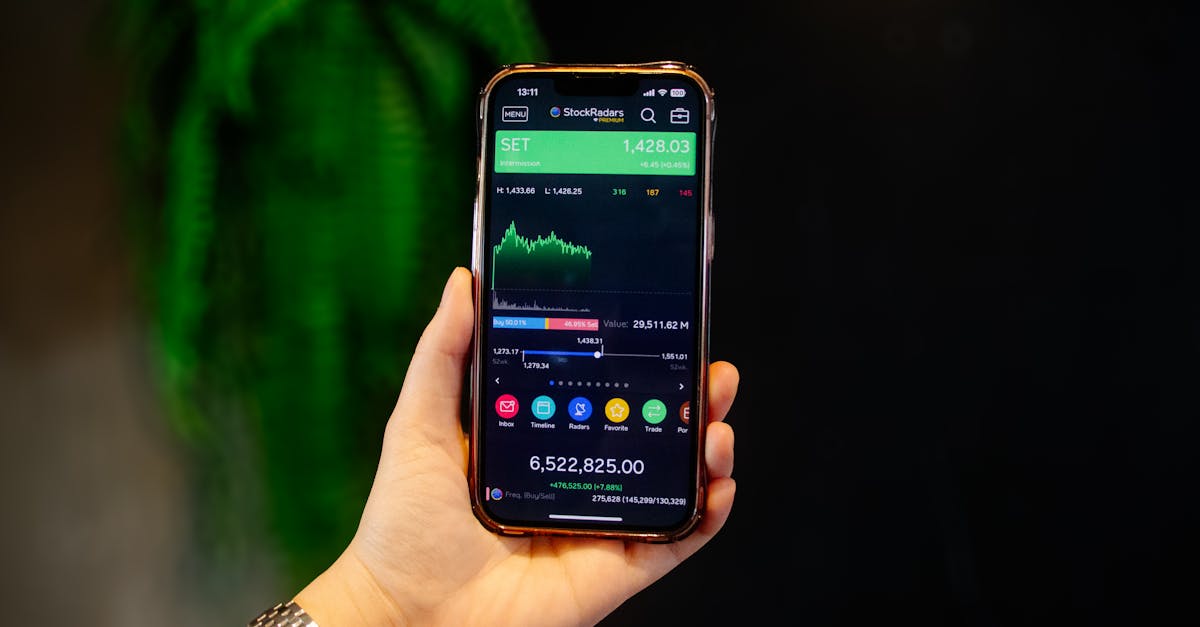
Why Many New Day Traders Lose Money and How to Avoid Their Missteps
You’ve seen the headlines, heard the stories: people turning small sums into fortunes, all from the comfort of their home computer. The allure of day trading is undeniable, promising quick riches and financial independence. But here’s the stark reality that many beginners only discover after significant losses: most new day traders lose money, often a lot of it, and quickly. In my years navigating the markets, I’ve watched countless enthusiastic newcomers dive into day trading with visions of grandeur, only to crash and burn within months. The market isn’t a casino, but for many, it becomes one because they approach it without understanding its true mechanics and, more importantly, without understanding themselves.
I’ve personally observed traders wipe out entire accounts, sometimes in a single day, by making fundamental mistakes that are entirely avoidable. What truly separates those who survive – and occasionally thrive – from the vast majority who fail isn’t some secret indicator or insider tip. It’s a deep, often painful, understanding of market dynamics, rigorous risk management, and perhaps most crucially, an iron grip on their own psychology. Without these, the market will exploit every weakness, every impulse, and every piece of flawed logic. If you’re considering day trading, or are already in the thick of it and struggling, this article will illuminate the common pitfalls that lead to ruin and, more importantly, show you a path to avoid them.
Key Takeaways
- Beginner day traders often over-leverage their capital, leading to swift and substantial losses.
- Relying solely on technical indicators without understanding market context is a common and costly error.
- Emotional trading, driven by fear or greed, consistently undermines rational decision-making.
- Neglecting a robust risk management plan ensures that small losses can quickly escalate into account-destroying events.
Over-Leveraging Magnifies Small Price Swings into Large Losses
The single biggest mistake I see new day traders make, time and time again, is over-leveraging their capital. This isn’t just a minor misstep; it’s a catastrophic error that turns otherwise manageable market fluctuations into account-wiping events. The temptation is enormous: with only a few hundred or thousand dollars, a broker offers you the ability to control tens of thousands, sometimes hundreds of thousands, of dollars in stock. The promise is that if the stock moves in your favor, even by a tiny fraction, your profits will be exponential. The reality, however, is that movements against you are equally, if not more, exponential.
I remember mentoring a young trader who started with $5,000. He was drawn to a popular tech stock that was showing some volatility. Against my advice, he decided to use the maximum leverage his broker allowed, controlling $100,000 worth of shares. His logic was simple: if it moves up 1%, he makes $1,000. What he failed to fully grasp was that if it moves down 1%, he loses $1,000. The stock had a minor dip, less than half a percent, and he held on, convinced it would rebound. It dipped further. Within an hour, his account was down 10%. He panicked, sold, and then, in a desperate attempt to recoup his losses, jumped into another highly leveraged trade. By the end of the day, he had less than $500 left.
What changed everything for me in my own early trading days was understanding that leverage is a double-edged sword that cuts deepest when wielded carelessly. My rule of thumb, which I still adhere to for new strategies or when the market is particularly choppy, is to never risk more than 1% of my total trading capital on any single trade. For a $10,000 account, that means a maximum loss of $100. If I use leverage, I calculate my position size so that even a stop-loss at a 0.5% move against me still only hits that $100 maximum. This conservative approach means that even a string of ten losing trades only reduces my capital by 10%, leaving ample room to recover and refine my strategy. It forces patience, discipline, and a focus on protecting capital above all else. Most beginners, in their hunger for big wins, completely bypass this crucial foundational step, setting themselves up for inevitable failure.
Neglecting Market Context and Relying on Isolated Indicators
Another prevalent and costly mistake among new day traders is neglecting broader market context and relying solely on isolated technical indicators. They’ll download a trading platform, slap on a few moving averages, an RSI, and maybe a MACD, and then trade solely based on crossovers or overbought/oversold signals. This reductionist view of the market, where every decision is distilled down to a few lines on a chart, consistently leads to poor outcomes.
In my experience, the mistake I see most often is traders buying into a stock purely because the RSI indicates it’s ‘oversold,’ without considering why it’s oversold. Is there a company-specific news event? Is the broader market in a steep downtrend? What’s the sector performance? Ignoring these questions is like trying to drive a car blindfolded, relying only on the turn signal clicks. You might eventually get somewhere, but it’s likely not where you intended.
I once knew a trader who was obsessed with a particular momentum indicator. He had backtested it rigorously on historical data and found periods where it generated fantastic returns. The problem was, he applied it in real-time as a rigid, standalone rule. One morning, the market opened sharply lower due to unexpected inflation data. His indicator flashed a ‘buy’ signal on a stock he liked, showing what it interpreted as a reversal. He jumped in, heavy. What he ignored was the overwhelming bearish sentiment engulfing the entire market, pulling almost all stocks down. His stock, despite the ‘buy’ signal, continued its slide, trapped in the gravitational pull of the wider market downturn. He was stopped out for a significant loss, purely because he isolated the signal from the context. The indicator might work in certain market regimes, but it utterly failed when the larger forces were ignored.
What changed everything for me was adopting a multi-layered approach to market analysis. Before even looking at a specific stock’s chart, I always assess the big picture: what is the overall market trend (S&P 500, Nasdaq, Dow)? What’s happening in related sectors? Are there any significant economic data releases or news events scheduled for the day that could influence price action? Only after establishing this context do I drill down into individual stock charts, looking for confirmation of my trade idea across multiple, non-correlated indicators and price action patterns. For example, a stock hitting a support level might be a good buy, but if the overall market is collapsing, that support level becomes far less reliable. Understanding the interconnectedness of markets is paramount; no stock trades in a vacuum. A holistic perspective transforms trading from a game of chance based on isolated signals to a more informed, probabilistic endeavor.
Succumbing to Emotional Trading: Fear, Greed, and Impulsivity
Perhaps the most insidious and destructive mistake new day traders make is succumbing to emotional trading, driven by fear, greed, and impulsivity. The market is a relentless psychological battleground, and for those who haven’t developed robust emotional discipline, it will exploit every vulnerability. I’ve witnessed countless promising strategies unravel because a trader couldn’t control their impulses in the heat of the moment.
In my early days, I was as guilty as anyone. I remember placing a trade, watching it go slightly against me, and then, seized by fear of a larger loss, closing it prematurely. Of course, the moment I closed it, the stock reversed and moved exactly in the direction I had initially anticipated. This ‘selling too soon’ due to fear is common. The flip side, ‘holding too long’ due to greed, is equally devastating. I’ve seen traders watch a winning trade climb, convinced it would go ‘to the moon,’ only to see it reverse sharply, eroding all their profits and often turning into a loss. The stubborn refusal to take profits when they are clearly available, purely out of a desire for more, is a classic path to regret.
The mistake I see most often is what I call ‘revenge trading.’ A trader takes a loss, feels a sting of frustration, and immediately jumps back into another trade, often with larger size, without proper analysis, purely to ‘get back’ at the market. The market, of course, doesn’t care about your feelings, and these revenge trades almost invariably lead to larger, compounding losses. This cycle of emotional response leading to irrational decisions, followed by more emotional responses, is a financial death spiral.
What changed everything for me was recognizing that trading is fundamentally a game of probabilities, not certainties, and that my emotions had no place in decision-making. I implemented a strict, non-negotiable trading plan that dictates my entry, exit, and stop-loss points before I even enter a trade. This pre-defined plan removes the need for real-time emotional decisions. When a trade hits its stop-loss, I exit without question. When it hits my profit target, I take my profits without question. This discipline requires practice, and it’s why I often advise beginners to start with very small position sizes or even paper trading until they can consistently execute their plan without emotional interference. A successful day trader isn’t just a market analyst; they are a master of their own mind.
Ignoring Risk Management Fundamentals
The vast majority of new day traders completely ignore fundamental risk management principles, viewing them as an impediment to profit rather than a prerequisite for survival. They focus almost exclusively on potential gains, while often giving only a passing thought to potential losses. This imbalance is a recipe for disaster in a volatile environment like day trading.
I’ve seen traders with solid analytical skills unravel because they lacked a defined stop-loss, or worse, they had one but would move it if the price touched it, hoping for a rebound. This ‘hope trading’ is one of the most destructive habits. A personal example comes to mind from my early days: I was in a stock that started going against me. My mental stop-loss was at $50, but when it hit $50, I thought, ‘It’s just a temporary dip, it’ll bounce back.’ I moved my mental stop to $49. It kept falling. I moved it again. This continued until I was down a shocking 20% on that single trade, a loss far greater than I should ever have allowed. It taught me a painful, but vital, lesson: a stop-loss that can be moved isn’t a stop-loss at all.
Another critical risk management aspect often overlooked is position sizing. This ties into over-leveraging but also extends to allocating too much of your account to a single trade, even without leverage. If you risk 10% of your account on one trade, you only need ten consecutive losses to wipe out your entire capital. While ten consecutive losses might seem unlikely, they are very possible in a volatile market or during a poor run of form. If you stick to the 1% rule, you can endure 100 consecutive losses before your account is gone, which provides an immense psychological cushion and allows for recovery and learning.
What changed everything for me was embedding a stringent risk management protocol into every aspect of my trading. Before I even consider an entry, I identify my precise stop-loss level – the point at which my trade idea is invalidated and I must exit, regardless of emotion. Then, and only then, do I determine my position size based on that stop-loss and my predefined 1% (or less) risk per trade. For example, if I have a $20,000 account and want to risk $200 per trade, and my stop-loss is $0.50 below my entry, I can only trade 400 shares ($200 / $0.50 = 400). This process, executed consistently, means that every trade has a defined, acceptable maximum loss, and no single trade can ever devastate my account. Risk management is not just a suggestion; it is the non-negotiable bedrock of sustainable day trading.
Lacking a Structured Trading Plan and Process
Many aspiring day traders jump into the market with little more than a vague idea and a hunger for profit. They often lack a structured trading plan and a consistent, repeatable process, instead relying on intuition, market chatter, or whatever catches their eye on a given day. This unstructured approach is akin to trying to sail across an ocean without a map, a compass, or even a destination in mind.
I’ve observed traders who spend hours scouring financial news, looking for the next ‘hot’ stock, without understanding what makes a stock suitable for their specific day trading strategy. They might chase a stock because it’s mentioned on a popular forum, only to find it moves entirely differently than anticipated, or they lack the knowledge to manage the trade effectively. This reactive, ad-hoc trading leads to inconsistent results and, ultimately, frustration and significant losses.
The mistake I see most often is a lack of clear entry and exit criteria. A trader might buy a stock, but then struggle to define when to take profits or, more critically, when to cut losses. They might buy on momentum, but then the momentum fades, and they’re left holding a bag, hoping for a bounce. This wishful thinking replaces objective analysis, and without a predefined plan, emotions quickly take over. Their process becomes panic.
What changed everything for me was developing and rigidly adhering to a comprehensive trading plan. This isn’t just a mental note; it’s a written document that outlines every aspect of my trading. It includes:
- My preferred market conditions: (e.g., specific volatility levels, overall market trend)
- My favored setups/patterns: (e.g., flag patterns, moving average crossovers, support/resistance bounces)
- Specific entry criteria: (e.g., confluence of indicators, price action confirmation)
- Precise exit criteria: (e.g., target profit levels, trailing stops)
- Non-negotiable stop-loss rules: (e.g., maximum dollar loss, percentage loss, technical break)
- Position sizing methodology: (e.g., 1% risk per trade)
- Daily routine: (e.g., pre-market analysis, trading hours, post-market review)
- Psychological guidelines: (e.g., no revenge trading, meditate before market open).
This structured plan transforms trading from a chaotic guessing game into a methodical, data-driven activity. It provides a clear framework for every decision, significantly reduces emotional influence, and makes it possible to objectively review performance and identify areas for improvement. A trading plan isn’t a guarantee of profits, but it is the essential blueprint for consistent, disciplined, and ultimately, sustainable trading.
The Allure of Quick Riches Over Realistic Expectations
The final, pervasive mistake that often underpins all the others is the allure of quick riches overshadowing realistic expectations. Many new day traders enter the market with a lottery ticket mentality, believing they can quickly amass a fortune with minimal effort or capital. They consume highlight reels of massive wins online and ignore the countless, quiet losses that are part of every professional trader’s journey. This unrealistic expectation sets them up for disappointment, impulsivity, and ultimately, failure.
I’ve seen traders expect to turn a $1,000 account into $10,000 in a month, or even a week. When their first few trades don’t yield these astronomical returns, they become frustrated. This frustration often leads to increasing position sizes, taking on excessive risk, or abandoning their (often nascent) strategy altogether in favor of ‘hot tips’ or chasing speculative plays. The belief that they ‘deserve’ quick profits prevents them from appreciating the gradual, disciplined process that actually builds wealth.
My own journey started with this mindset. I remember thinking that if I could just make 5% a day, I’d be rich in a year. The reality of consistent 5% daily returns is a fantasy. This unrealistic goal led me to take trades that didn’t fit my criteria, hold losers too long, and generally trade aggressively out of impatience. It took several painful losses, including one particularly large one, to reset my perspective. I had to confront the fact that consistent, small gains, protected by rigorous risk management, are the true path to long-term success.
What changed everything for me was redefining my definition of success. Instead of chasing daily percentage gains, I began to focus on consistency, discipline, and capital preservation. My goal shifted from ‘make X dollars’ to ‘execute my plan flawlessly,’ ‘manage risk effectively,’ and ‘learn from every trade.’ I also adjusted my profit expectations to be far more realistic, aiming for modest monthly returns rather than unrealistic daily spikes. Professional traders understand that the market offers opportunities, but it rarely offers easy opportunities. Building wealth through day trading is a marathon of disciplined execution, not a sprint for instant gratification. It requires patience, humility, and a deep respect for the unpredictable nature of the market. Without these qualities, the pursuit of quick riches will almost certainly lead to quick losses.
Frequently Asked Questions
What is the primary reason most beginner day traders lose money?
Most beginner day traders lose money primarily due to over-leveraging their capital and neglecting proper risk management. The allure of magnifying small gains also magnifies losses, leading to rapid account depletion when trades go against them, even by a small amount.
How much capital do I need to start day trading to avoid common pitfalls?
While you can technically start with a small amount, to genuinely avoid common pitfalls like over-leveraging and emotional trading, I recommend starting with at least $10,000 to $25,000. This allows for smaller, more appropriate position sizing (e.g., risking 1% of your account per trade) and provides a buffer to learn without immediately wiping out your capital.
Should I rely on technical indicators alone for day trading decisions?
No, relying solely on technical indicators without broader market context is a significant mistake. While indicators can provide valuable signals, they should be used in conjunction with an understanding of overall market trends, sector performance, economic news, and price action to confirm trade ideas and avoid false signals.
How can I prevent emotional trading ruining my performance?
The most effective way to prevent emotional trading is to develop and strictly adhere to a comprehensive written trading plan. This plan should define your entry, exit, and stop-loss criteria before you enter a trade, removing the need for real-time, emotional decision-making. Consistent execution of this plan, especially with small position sizes, builds discipline.
What is a non-negotiable risk management rule for day trading?
A non-negotiable risk management rule is to always define a stop-loss for every trade and never move it. Additionally, only risk a very small percentage of your total trading capital (e.g., 1%) on any single trade. This protects your account from devastating losses and ensures you live to trade another day.
What are realistic profit expectations for a new day trader?
Realistic profit expectations for a new day trader are modest and focused on consistent, small gains rather than large, daily spikes. Many successful professional traders aim for single-digit percentage returns per month (e.g., 2-5%), focusing on compounding these small gains over time. The goal should be consistent execution of your plan and capital preservation, with profits as a byproduct of discipline, not the primary driver.
Conclusion
Day trading, when approached with discipline, a deep understanding of market mechanics, and rigorous risk management, can be a path to financial growth. However, for most beginners, it quickly becomes a costly lesson in humility. The allure of quick riches, combined with a lack of structured planning, emotional control, and an underappreciation for comprehensive risk management, consistently leads to substantial losses. My journey, like many others, was paved with early mistakes born of impatience and unrealistic expectations. It was only by confronting these fundamental flaws in my approach that I began to see consistent results.
If you’re serious about day trading, commit to capital preservation above all else. Develop a detailed trading plan, learn to analyze the market in context, and master your own psychology. Start small, learn from every trade, and treat the market with the respect it demands. Your financial future depends on your ability to transcend the common pitfalls and build a resilient, disciplined approach. The market is unforgiving of unpreparedness, but it rewards those who commit to the journey of continuous learning and rigorous self-control. The next step is to sit down, define your initial capital, and write out your first, non-negotiable trading plan. Don’t just think about it; commit it to paper and then execute it with unwavering discipline.
Written by Marcus Thorne
Investment strategies & market analysis
A former investment advisor with a passion for demystifying market dynamics and long-term wealth creation.
You Might Also Like

7 Reasons Your Estate Plan Won't Protect Your Family
Discover the 7 overlooked reasons your estate plan might fail your family and how to create a resilient plan for true financial security.

My Year-Long Credit Score Challenge: What I Learned Beyond the Numbers
I embarked on a year-long credit score challenge, aiming to understand what truly moves the needle beyond generic advice. Here's what I discovered.

Roth IRA vs. Solo 401(k): Maximizing Retirement Wealth for the Self-Employed
Navigate Roth IRA and Solo 401(k) options for self-employed individuals to maximize retirement savings with tax-advantaged growth.